
The SurgiCare Center of Utah
When your doctor recommends surgery, you deserve a facility built specifically for that moment — not a hospital OR shared with a dozen other specialties. The SurgiCare Center of Utah (SCU) is one of the most prestigious ophthalmology specialty ambulatory surgery centers in the country.
SCU is located on the second floor of The Eye Institute of Utah at 755 East 3900 South, Salt Lake City, UT 84107. There is no separate address to find, no unfamiliar hospital to navigate. You walk in, go upstairs, and you’re exactly where you need to be.
Conveniently located in the heart of the Salt Lake Valley, SCU sits just one block from St. Mark’s Hospital and is minutes from both I-80 and I-15. A large on-site parking lot, accessible for RVs, buses, and oversized vehicles, means getting here is the easy part.
SCU performs the full spectrum of ophthalmic surgery — from standard to custom cataract surgery to corneal, retinal, glaucoma, and oculoplastic procedures, and more. Whatever your surgeon recommends, you’re in the right place.
What to Expect When You Arrive
The SurgiCare Center of Utah occupies the entire second floor of The Eye Institute of Utah. It is a 30,000 sq. ft. facility designed with one focus: exceptional ophthalmic care.
The Center at a Glance
- 4 fully equipped operating rooms
- 5 pre-op and recovery rooms
- Dedicated second-floor waiting area for family and companions
- Large parking lot — accessible for RVs, buses, and large vehicles
- Fully handicap accessible
- 755 East 3900 South, Salt Lake City, UT 84107 | (801) 266-2283
- Minutes from I-80 and I-15, located a few blocks west of St. Mark’s Hospital
Better Care. Lower Cost. No Hospital Hassle.
Most people assume that surgery means a hospital.
But for eye surgery, an ophthalmology-specific ambulatory surgery center isn’t just an alternative — it’s the better choice in almost every way.
Specialized From the Ground Up
Everything at SCU is designed around eye surgery. Our operating rooms, our equipment, our nursing staff are all focused on ophthalmology. You won’t share a waiting room with general surgery patients or wait in a queue behind unrelated emergencies. The environment is quieter, calmer, and more focused, a meaningful difference when you’re about to have surgery on your eyes.
Transparent Pricing with No Hidden Fees
Hospital-based surgery often comes with a stack of bills you didn’t see coming: separate invoices from the facility, the anesthesiologist, and sometimes providers you never even met. At SCU, you receive one bill and we provide a good-faith estimate upfront so you know what to expect before your procedure, not after. No surprises. No separate charges. What we quote is what you pay.
Significantly More Affordable
The cost difference between an ambulatory surgery center and a hospital can be dramatic. That’s true whether you’re using insurance or paying out of pocket. SCU is competitively priced even for cash-pay patients, and we accept most major insurance plans.
In and Out — The Same Day
No hospital admission. No overnight stay. Plan for 3–4 hours at SCU from arrival to discharge, and many patients are pleasantly surprised when things move faster. Efficient, expert care, and then you go home.
First-in-Class Technology.
SCU has a long track record of being among the first surgical centers in the country to acquire emerging ophthalmic technologies. Through active participation in clinical research studies, our surgeons gain access to devices and techniques before they’re widely available.Our patients benefit directly from that expertise. For surgeons evaluating SCU for open-access privileges, the technology list below is a good place to start.
Our extensive repository of IOL (intraocular lens) research means your surgeon isn’t just using proven tools. In many cases, they helped prove them.
Technologies in Use at SCU
ORA System (Optiwave Refractive Analysis)
The ORA System is an intraoperative aberrometer used during cataract surgery to take real-time refractive measurements while the eye is open. This gives your surgeon precise, live data to guide lens power selection during the procedure itself, improving accuracy and reducing the likelihood of needing corrective glasses afterward.
DMM Digital Management Systems
SCU uses advanced digital management systems that support precision, consistency, and quality control across surgical procedures,helping ensure every patient receives the same high standard of care.
Epithelial Cross-Linking (epi-CXL)
The Eye Institute of Utah was the first in the country to acquire epithelial cross-linking technology, a procedure used to slow or halt the progression of keratoconus by strengthening the collagen fibers of the cornea. For patients facing this condition, early intervention can make a meaningful difference in preserving long-term vision.
When the Eye Institute of Utah acquires a technology first, our surgeons are gaining real-world experience before most centers have even placed an order.
A Full Spectrum of Ophthalmic Surgery
SCU is equipped to perform a comprehensive range of eye procedures, from routine cataract removal to complex reconstructive surgery. Whatever your surgeon recommends, it’s almost certainly performed right here
- Standard cataract removal
- Complex cataract surgery
- Premium intraocular lens (IOL) options
- EVO ICL™ (Implantable Collamer Lens)
- Refractive Lens Exchange (RLE)
- Full spectrum of glaucoma surgery
- Selective Laser Trabeculoplasty (SLT)
- Minimally Invasive Glaucoma Surgery (MIGS)
- Trabeculectomy
- Retinal surgery and treatment
- Vitrectomy
- Retinal detachment repair
- Macular degeneration treatment
- Diabetic retinopathy treatment
- Intravitreal injections
- Corneal surgery and treatment
- Corneal transplants (keratoplasty)
- Lamellar keratoplasty (expanding offering using donor sclera)
- Intacs corneal implants
Anterior segment reconstruction is a highly specialized area of ophthalmic surgery, and one that sets SCU apart. Few facilities have the expertise or equipment to offer these procedures. Our team does.
- Artificial iris placement
- Pupilloplasties
- Fixation procedures
- Upper and lower blepharoplasty (eyelid lift)
- Brow lift
- DCR (dacryocystorhinostomy: tear duct surgery)
- Orbital surgery
- Lesion removal
Specialized Staff. Every Role, Every Step.
Every member of the SCU team is here because eye surgery is their specialty. Our staff aren’t generalists borrowed from a hospital pool: they are ophthalmology-trained professionals who work in this environment every day.
YOUR CARE TEAM INCLUDES:
- Registered Nurses (RNs)
- Licensed Practical Nurses (LPNs)
- Certified Nursing Assistants (CNAs)
- Scrub Technicians
- Orderlies
- Sterilization Specialists
- Certified Registered Nurse Anesthetists (CRNAs)
- Surgeons
Together, this team supports every phase of your surgical experience from the moment you arrive to the moment you’re discharged.
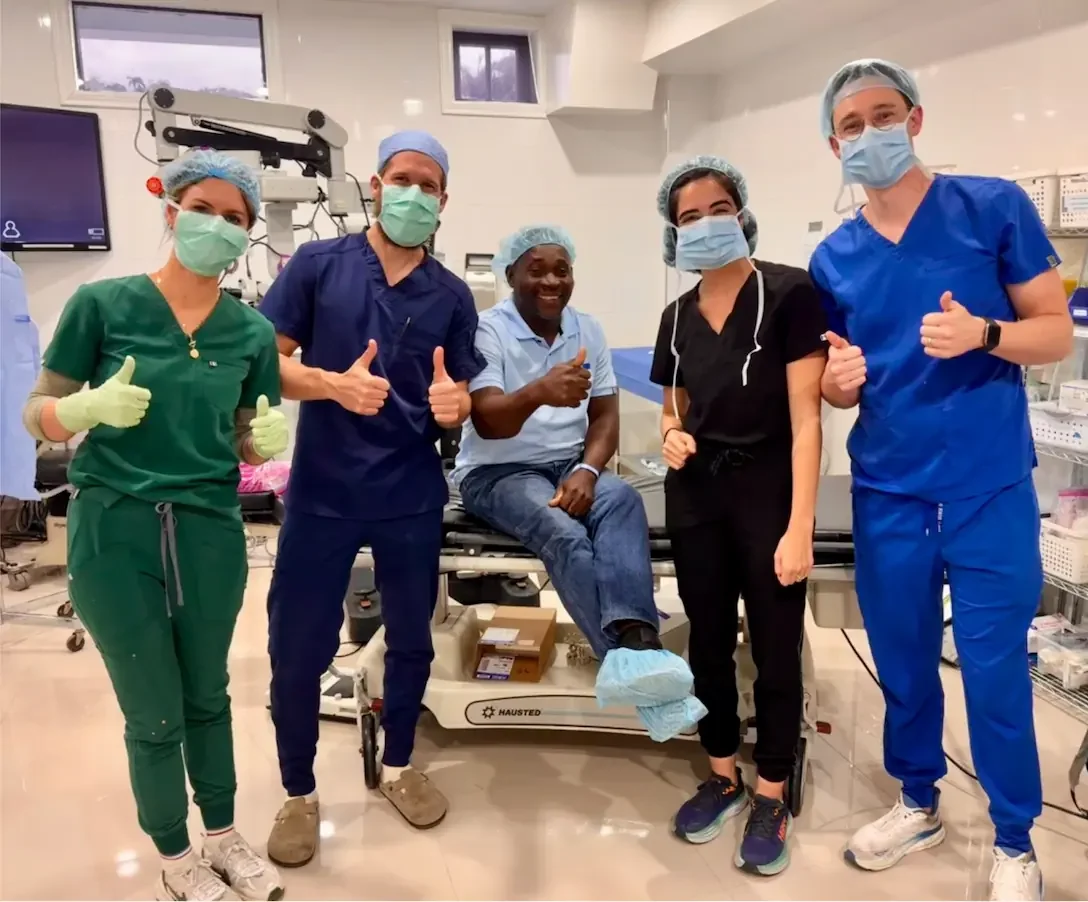
What to Expect on Surgery Day at SCU
Knowing what to expect can make all the difference. Here’s a straightforward walkthrough of your day at SCU, from arrival to discharge.
Plan for 3–4 hours at the center. We set this expectation so you can plan your day without stress. Most patients are pleasantly surprised when things move faster.
Step 1 — Arrival & Check-In
When you arrive, you will check in downstairs on Level 1 prior to heading up to the SurgiCare Center of Utah on Level 2. Our team will welcome you and help you complete any remaining consent forms and paperwork. This is also when we confirm your health history and review any pre-operative instructions you received.
Step 2 — Pre-Op Preparation
A nurse will get you settled, verify your information, begin dilating your eyes if needed for your procedure, and prepare you for surgery. Your family or companion is welcome to be with you during this time.
Step 3 — Anesthesia Consultation
Your Certified Registered Nurse Anesthetist (CRNA) will meet with you to review your health history and create a personalized anesthesia plan. Depending on your procedure, options range from topical numbing drops to a small IV sedative. Your anesthesia team will be present with you throughout the entire procedure.
Step 4 — Your Surgeon Visits
Before you’re taken back to the operating room, your surgeon will meet with you in pre-op to review your plan, answer any final questions, and confirm you’re ready.
Step 5 — Surgery
Procedure length varies depending on the type of surgery you’re having. Your care team will give you a more specific time estimate based on your individual procedure.
Step 6 — Recovery & Discharge
After surgery, you’ll return to your pre-op room to rest. Your nursing team will monitor you, review your post-operative care instructions with you in detail, and make sure you feel ready before you leave.
A Few Important Reminders
- You must arrange for an adult driver. You will not be permitted to drive yourself home following surgery.
- Please avoid all food and drink after midnight, including water. If you have specific dietary needs or take daily medications, your nursing team will advise you on a safe pre-operative plan.
- Plan to take it easy when you get home. Rest on the day of your surgery.
- Take all medications as directed by your care team.
- Post-operative instructions will be reviewed with you at discharge by a nurse.
- For questions after surgery, contact your surgeon’s office directly. For emergencies, call 911.
Transparent Pricing. Flexible Options.
Financing Options
- CareCredit is accepted as a financing option for eligible patients. We offer 0% APR for 24 months for approved applicants.
Certified. Rigorous. Accountable.
The SurgiCare Center of Utah is a CMS-accredited ambulatory surgery center, meeting the standards established by the Centers for Medicare & Medicaid Services. We are required to monitor and report on infection control measures monthly, a responsibility we take seriously. SCU is also actively pursuing AAAHC accreditation in 2026, reflecting our ongoing commitment to quality and patient safety.
Frequently Asked Questions
How long will I be at the surgery center?
Plan for 3–4 hours from arrival to discharge. Many patients finish sooner. We build in extra time so you’re never rushed, and most people leave pleasantly ahead of schedule.
Can someone stay with me?
Yes. Family members and companions are welcome throughout your visit, including during pre-op preparation and recovery. We have a dedicated waiting area on the second floor. The only area they cannot enter is the operating room itself.
Do I need a driver?
Yes, and this is non-negotiable for your safety. You must arrange for an adult driver before your surgery date. You will not be able to drive yourself home following your procedure, regardless of the anesthesia used.
What type of anesthesia will I receive?
SCU uses monitored anesthesia care (MAC). Depending on your procedure, this may involve topical numbing drops, a small IV sedative, or both. Your CRNA will meet with you before surgery to create a personalized plan and will be present with you throughout.
What should I do the night before surgery?
Do not eat or drink anything after midnight. This includes water. If you have a chronic condition, specific dietary needs, or take daily medications, our nursing team will provide guidance on a safe pre-operative plan during your pre-surgery communications.
How is SCU different from having surgery at a hospital?
SCU is 100% ophthalmology-focused. Our staff, equipment, and environment are all designedfor eye surgery, not shared with other specialties. You’ll spend less time waiting, receive more personalized care, and pay significantly less than you would at a hospital. You’ll also receive one bill, with no unexpected charges from separate providers.
Are you a surgeon interested in performing procedures at SCU?
SCU welcomes qualified ophthalmic surgeons through our open-access privileges program. To learn more, please contact our Co-Management Coordinator, Ingrid Torres, directly.
Ingrid Torres – OD Outreach
Email: itorres@theeyeinstitute.com
Phone: (801) 263-5722
Fax: (801) 268-6151
Patient & Surgeon Testimonials

The Doctor and staff were wonderful, friendly took their time diagnosing what needs to be done. The procedure was done with no pain. Had both eyes done removing cataracts.
– Barb H.
Ready When You Are
Your surgical team is here, and so is everything you need to feel confident before your procedure. If you have questions, we’re happy to help.
Call us at (801) 266-2283 or contact The Eye Institute of Utah to get started.
Page Updated:
The Eye Institute of Utah Doctors have either authored or reviewed and approved this content.